
Quick answer: The CDC sorts people who may not be able to get the yellow fever vaccine into two groups. Precautions (infants 6 to 8 months old, adults over 60, pregnancy, and breastfeeding) mean the vaccine may still be the right call when the benefit outweighs the risk. Contraindications (allergy to the vaccine or a component such as egg, age under 6 months, organ transplant, malignant tumor, thymus disorder, primary immunodeficiency, immunosuppressive or immunomodulatory therapy, and symptomatic HIV or a CD4 count under 200) mean the vaccine should not be given at all. If you fall into either group and your trip includes a yellow fever country, you need a plan, and sometimes a letter of exemption.
One of the most common vaccines we give is for yellow fever (YF) prevention. That is because yellow fever immunization is required by some countries for entry, and required by other countries if you have been to a yellow fever endemic country. YF immunization is different from many other vaccines, and it comes with its own precautions and contraindications.
What is yellow fever?
In brief, yellow fever is a virus belonging to a group of viruses called flaviviruses. It is spread by mosquitoes and found in certain regions of South America and Africa (CDC, 2026). People become infected when bitten by a mosquito carrying the virus, which it picked up from non-human primates or from other infected people. You can read more about transmission of the yellow fever virus at the CDC.
If you are headed to a country where the virus circulates, our yellow fever vaccine page covers where the risk is, how the vaccine is given, and the proof of vaccination card. Country pages for Brazil, Peru, Kenya, and Tanzania and Zanzibar list what else is recommended alongside it.
How do you prevent yellow fever?
Avoiding mosquito bites is always going to be important, no matter where you travel, because so many illnesses are transmitted by mosquitoes. The Centers for Disease Control and Prevention recommends wearing long sleeve clothing, using insect repellent, treating clothing with 0.5% permethrin, and staying in locations with window screens, air conditioning, or mosquito netting (CDC, 2026). The same habits cut your risk from malaria, dengue, and the other insect-borne diseases we counsel on.
Equally important is receiving a YF vaccine. It is recommended for people aged 9 months and older who live in or travel to areas at risk for yellow fever in Africa and South America.
Why is the yellow fever vaccine different from other vaccines?
The YF vaccine is a live attenuated (weakened) form of the virus. We do give other vaccines that contain live viruses, including MMR (measles, mumps, rubella), varicella (chickenpox), and herpes zoster (shingles) (Department of Health and Human Services, 2026). Live attenuated viruses often create lifetime immunity because they are so similar to the infection they prevent.
Because it is a live virus, even though it is weakened, people who are immunosuppressed or part of a vulnerable population may be at risk for an adverse reaction. The CDC divides those populations into two categories: precautions and contraindications.
Who should not get the yellow fever vaccine?
Precautions
Precautions are groups at increased risk of a reaction to the vaccine who may still benefit from being vaccinated, meaning the benefit the vaccine provides outweighs the possible risk of an adverse reaction. These groups are:
- Infants between 6 and 8 months old
- Adults over 60 years old
- Pregnancy
- Breastfeeding
Contraindications
Contraindications are groups who should not get the vaccine because they have a greater risk of a severe reaction, meaning the risk of receiving the vaccine outweighs the possible benefit. These groups are:
- Allergic to the vaccine or a vaccine component, such as eggs
- Younger than 6 months old
- Organ transplant recipients
- Diagnosed with a malignant tumor
- Diagnosed with a thymus disorder associated with abnormal immune function
- Diagnosed with a primary immunodeficiency
- Using immunosuppressive or immunomodulatory therapies
- Showing symptoms of HIV infection, or CD4+ T-lymphocytes less than 200/mm3 (less than 15% of total lymphocytes in children aged 6 years or younger)
Can you get the yellow fever vaccine over 60?
The most common precaution group we see is people over the age of 60. Adults over 60 are at increased risk of yellow fever vaccine associated neurologic disease (YEL-AND) and yellow fever vaccine associated viscerotropic disease (YEL-AVD).
YEL-AND is a collection of neurological symptoms including disseminated encephalomyelitis, which is when your body mistakes part of your central nervous system for a bacteria or virus and attacks it (Cleveland Clinic, 2023), Guillain-Barré syndrome, meningoencephalitis, and rarely cranial nerve palsies. YEL-AND can occur in any YF vaccine recipient. It is rarely fatal.
YEL-AVD is a severe illness similar to yellow fever itself. The vaccine virus proliferates in multiple organs, leading to multi-organ dysfunction. There have been over 100 cases of YEL-AVD worldwide since 2001.
Here is how those two reactions compare, using CDC rates:
| Reaction | Rate, all ages (US) | Rate, age 60 and over | Symptom onset | Fatality |
|---|---|---|---|---|
| YEL-AND (neurologic) | 0.8 per 100,000 doses | 2.2 per 100,000 doses | 2 to 56 days after vaccine | Rarely fatal |
| YEL-AVD (viscerotropic) | 0.3 per 100,000 doses | 1.2 per 100,000 doses | 1 to 18 days, average 4 days | 43% |
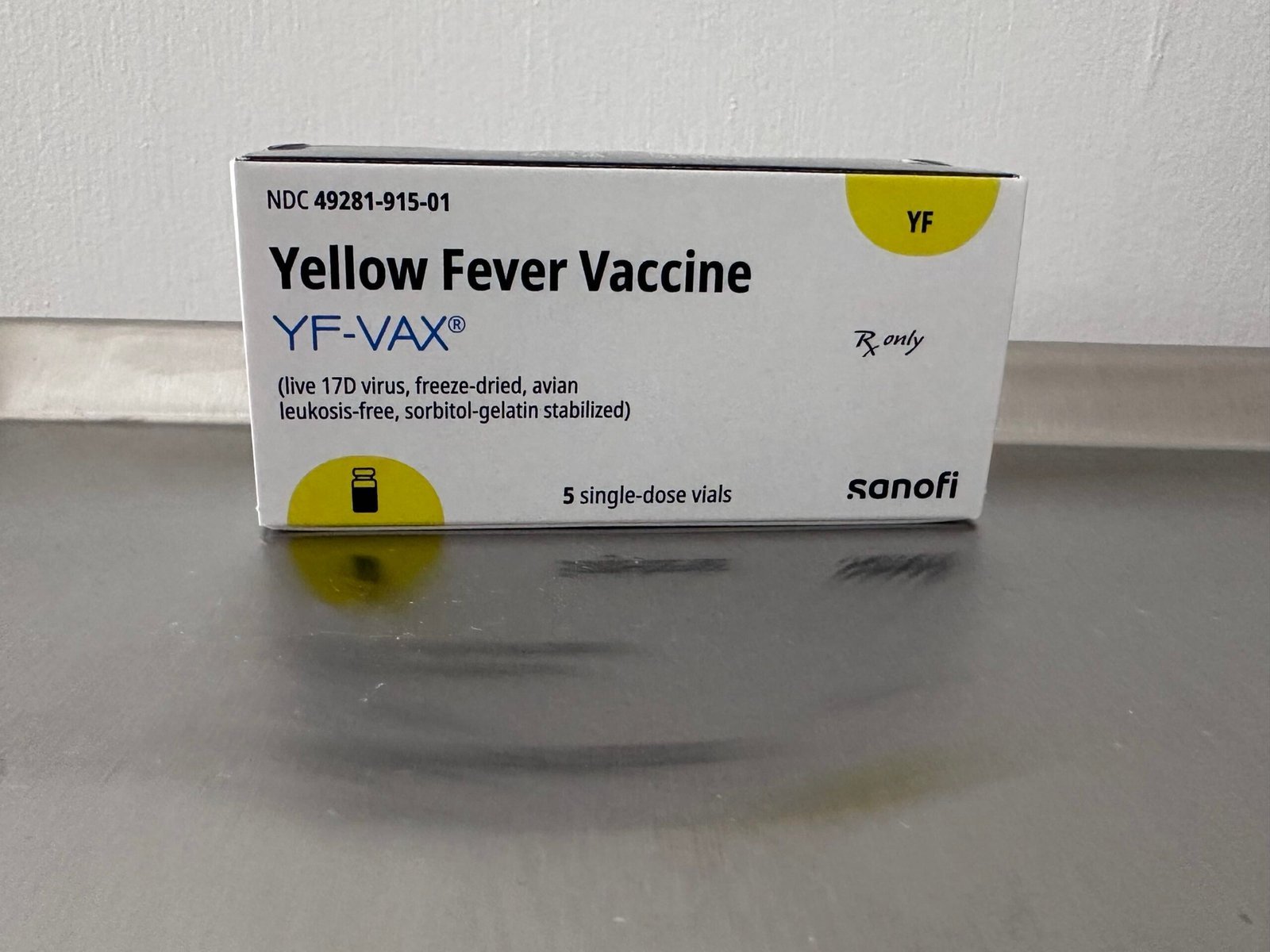
There was a YF vaccine on the market called Stamaril with higher risk. It is no longer available in the US. Currently YF-VAX by Sanofi Pasteur is our only YF vaccine (CDC, 2026).
Does this mean people aged 60 and over cannot get the YF vaccine? No. Remember, it is a precaution and something to be aware of.
Is the yellow fever vaccine safe during pregnancy or breastfeeding?
According to the CDC, you are unlikely to have any problems with the vaccine, and your baby is likely to be born without any adverse effects from it (CDC, 2025). The CDC also recommends delaying pregnancy after receiving the vaccine, with the speculation that 2 weeks after conception is probably adequate, while a one month delay is recommended as safer.
One thing to be aware of: if you are pregnant when you are vaccinated, you may not develop the immunity you would otherwise develop, and a booster vaccine is often recommended (CDC, 2025). Keep in mind that medical studies are typically not performed specifically on pregnant women, so the information is limited.
Breastfeeding is another special consideration. YEL-AND has been described in 3 cases of infants who were exclusively breastfed, all under 1 month of age (CDC, 2025). Some experts recommend pumping and dumping breast milk for 2 weeks after receiving a YF vaccine. Remember that if the infant is 9 months or over they are eligible for a YF vaccine themselves, and over 6 months with precautions, so breastfeeding in this population may not be a concern.
As noted above, medical studies are not performed on lactating women, so information is limited, and statistics in these two populations are often collected retrospectively, meaning the adverse event has already happened.
What if the yellow fever vaccine is a contraindication for you?
If the YF vaccine is a contraindication for you, your risk of YEL-AND, YEL-AVD, and other adverse reactions is too high to be acceptable.
One question that comes up is holding immunosuppressants. Technically, this can be done. However, it means a prolonged hold of a medication that is potentially keeping you alive. Holding Humira both before and after the vaccine for roughly 6 weeks is required for a YF vaccine, for example. Holding medications that treat autoimmune conditions carries its own risks and is not recommended. If it is done at all, it should be under the care and with the full authority of the rheumatologist, gastroenterologist, oncologist, dermatologist, or other prescriber managing those medications.
In general, if YF vaccine is a contraindication for you, you should not travel to a yellow fever endemic area if it is avoidable. If the trip cannot be avoided, a letter of exemption should be obtained and enhanced precautions against mosquitoes should be followed very closely. It should be noted that there is no antiviral treatment for yellow fever, so the decision to travel to an endemic country without the vaccine deserves the gravest consideration. We work through that decision, and write the exemption letter when it is appropriate, at a pre-travel visit.
Can you get the yellow fever vaccine with an egg allergy?
Egg allergy is a listed contraindication for the YF vaccine by the CDC. One study of 435 children, 225 of them classified as probably allergic and 74 of those with a previous anaphylactic reaction to egg, is worth knowing about. All of the children were successfully vaccinated. Most had no reaction. Twenty-one reacted: 10 with a local reaction, 10 with a mild skin reaction at a distant site (rash, swelling, or itching somewhere other than the vaccine site), and 1 requiring an epinephrine injection (Lopes et al., 2023).
Does that mean it is safe to get a YF vaccine with an egg allergy? The study concluded that it is. However, the sample size is not vast. Consider this: have you had flu vaccines in the past, and did you tolerate them well? Flu vaccines also contain egg proteins. If you have had an anaphylactic reaction to a flu vaccine, it is probably not safe for you to receive a YF vaccine. If you have a known egg allergy, have a conversation with your allergist.
What precautions do we take when you get a yellow fever vaccine?
One of the important parts of your visit is the pre-travel paperwork. It helps us determine whether a YF vaccine is recommended or required, investigate your medication and health history thoroughly, and give you proper education.
If you should develop an immediate anaphylactic reaction, epinephrine injections and Benadryl are always on hand. We watch you after your vaccine, and every vaccine you receive comes with a Vaccine Information Sheet (VIS) published by the CDC, so you and your loved ones know the signs of an adverse reaction to watch for afterward.
Adverse reactions should always be reported to the clinic or individual who gave you the vaccine, so it can be properly reported to the manufacturer and to local health departments as indicated. If there is any question of an immediate or delayed severe reaction, a trip to the emergency department is warranted.
Frequently asked questions
Who should not take the yellow fever vaccine?
People with a contraindication: allergy to the vaccine or one of its components such as egg, age under 6 months, organ transplant recipients, a malignant tumor, a thymus disorder with abnormal immune function, a primary immunodeficiency, use of immunosuppressive or immunomodulatory therapy, and symptomatic HIV infection or a CD4 count under 200/mm3. In those cases the risk of a severe reaction outweighs the benefit of the vaccine.
Can I have the yellow fever vaccine if I am over 60?
Yes. Being over 60 is a precaution, not a contraindication. The rate of neurologic reactions rises from 0.8 to 2.2 per 100,000 doses, and viscerotropic reactions from 0.3 to 1.2 per 100,000 doses. Those are still small numbers, and the decision comes down to your destination, your health history, and whether the country requires proof of vaccination.
Is the yellow fever vaccine contraindicated in pregnancy?
Pregnancy is a precaution, not a contraindication. The CDC reports you are unlikely to have problems and the baby is likely to be born without adverse effects, but immunity may be weaker, so a booster is often recommended. The CDC also suggests delaying pregnancy after vaccination, with one month considered the safer window.
Can I get the yellow fever vaccine if I am allergic to eggs?
Egg allergy is listed as a contraindication by the CDC. A 2023 study of 435 children with suspected egg allergy vaccinated all of them successfully, with 21 reactions and one requiring epinephrine, so it is not an absolute wall. A useful gut check is whether you have tolerated flu vaccines, which also contain egg protein. Talk to your allergist first.
What if I cannot get the vaccine but the country requires it?
You need a letter of exemption, written by a travel medicine provider, along with strict mosquito precautions. Since there is no antiviral treatment for yellow fever, travel to an endemic area without the vaccine should be considered very carefully, and sometimes the right answer is to change the itinerary.
Plan your yellow fever visit in Tucson
Here at Wildflower Travel and Wellness Clinic, we have a passion for travel and health education and, as strange as it sounds, for infectious diseases as well. Our goal is to send you on your journeys educated, informed, prepared, and protected.
If a precaution or contraindication applies to you, bring it to us before you book the flights, not after. Call to schedule your appointment for your next adventure. You can also read more about the yellow fever vaccine, browse our travel and routine vaccines, and check country-specific travel advice for your destination.
Happy and healthy travels!
References
- Centers for Disease Control and Prevention. 2025. Travel and Breastfeeding.
- Centers for Disease Control and Prevention. 2025. Yellow Fever Vaccine and Pregnancy.
- Centers for Disease Control and Prevention. 2026. About Yellow Fever.
- Cleveland Clinic. 2023. Acute Disseminated Encephalomyelitis.
- US Department of Health and Human Services. Reviewed April 2026. Vaccine Types.
- Lopes, F. T. T., Romanelli, R. M. de C., Oliveira, I. de, Abrantes, M. M., Rocha, W. 2023. Safe Administration of Yellow Fever Vaccine in Patients With Suspected Egg Allergy. Journal of Allergy and Clinical Immunology: Global 2(3). doi: 10.1016/j.jacig.2023.100089.
This post is for general educational purposes and is not a substitute for individual medical advice. Talk with a qualified travel medicine provider about your specific situation.