
Quick answer: There are currently no studies on taking GLP-1 medications (like Ozempic, Wegovy, Mounjaro, or Zepbound) with the oral typhoid vaccine (Vivotif), and there are no official contraindications either. Because GLP-1s slow gastric emptying, and the oral vaccine is a live, enteric-coated capsule taken over four doses, it is reasonable to wonder whether the vaccine works as well and whether side effects stack. If you are on a stable GLP-1 dose with no side effects, the oral vaccine may be fine. If you recently raised your dose or have moderate-to-severe GI side effects, the injectable (IM) typhoid vaccine is the safer choice. The best move is to talk it through at a pre-travel visit.
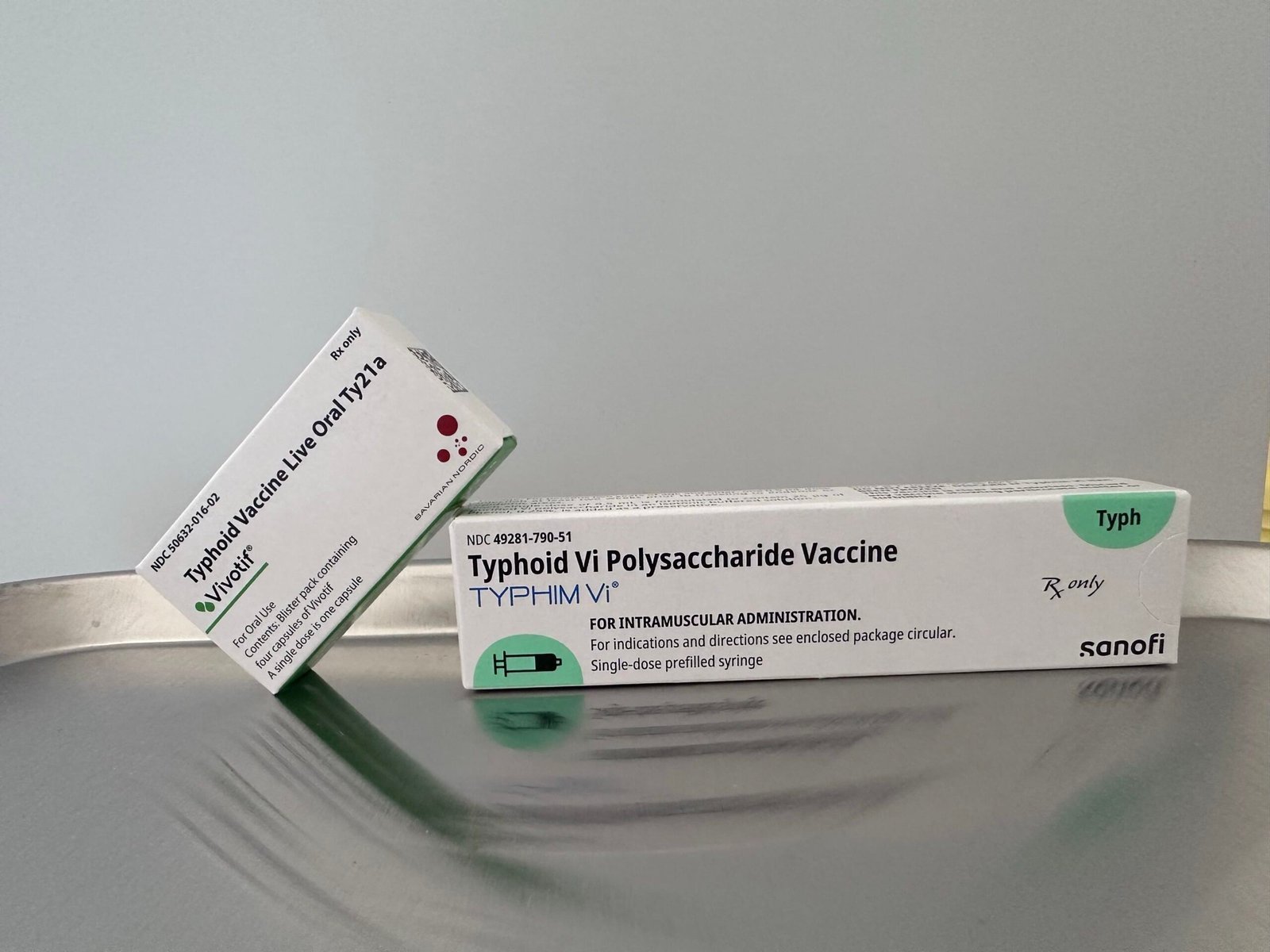
If you take a GLP-1 medication and have an international trip coming up, you may need a typhoid vaccine, and you may have a choice between an oral capsule and a shot. As a GI nurse practitioner who also practices travel medicine, this overlap is a topic of special interest to me, so I dug into it. Here is what we know, what we do not, and how to decide.
Wait, there are oral vaccines?
Yes! A few vaccines come in an oral formulation. In the travel world, those are the oral typhoid fever vaccine (Vivotif in the US) and the oral cholera vaccine (Vaxchora in the US). There is an oral polio vaccine too, but it is no longer available in the US.
While the cholera vaccine only comes in one form (oral), the typhoid fever vaccine is also available as an injection. Just like most of the other “regular” vaccines you get, it goes into the muscle. For this post, we will focus on the oral typhoid fever vaccine.
What is typhoid fever and why do I need a vaccine?
Typhoid fever is an infection caused by the bacterium Salmonella typhi. It spreads through contaminated food and water in certain high-risk areas, and according to the World Health Organization (WHO) it has become a growing problem due to urbanization and climate change (WHO, 2023). About 9 million people worldwide get sick from typhoid fever and 110,000 die from it each year (WHO, 2023). In the United States there are an estimated 5,700 illnesses and 620 hospitalizations from typhoid fever annually, most in people who have traveled internationally (Centers for Disease Control and Prevention, 2024).
As the name suggests, the most common symptom is a high fever, usually lasting more than three days. People may also develop abdominal pain, diarrhea, and headache. Some people develop a rash (CDC, 2024). Without treatment, symptoms can last for months. And if you get better without treatment, you may still carry the bacteria and spread it to others (CDC, 2024).
Contaminated food and water are a major concern when traveling. Many people remember to drink bottled or purified water, but we forget about the water our food was washed in (especially uncooked food) or the ice in our drinks. We also cannot know the hand hygiene of everyone around us, and spread by the fecal-oral route is possible. (For more on this, see our guide to safe food and beverage tips for travel.) All travelers visiting endemic areas, meaning places where typhoid “lives,” are at risk.
How does the oral typhoid vaccine work?
The oral typhoid fever vaccine is given as an enteric-coated capsule on an every-other-day schedule, for four total doses. Enteric coating means the capsule will not break down in the stomach, where the pH is low (acidic), but will break down in the intestinal tract, where the pH is higher (less acidic).
Lots of medications are enteric coated, from aspirin to antibiotics. The reason varies. Sometimes it is to protect the stomach, other times to protect the medication from breaking down too early. Keep this detail in mind, because it matters once we bring GLP-1s into the picture.
What is a GLP-1 receptor agonist medication?
GLP-1 receptor agonist medications (commonly just called GLP-1s) go by several trade names: Wegovy, Ozempic, Trulicity, and Victoza. We now also have GIP/GLP-1 receptor agonist medications such as Mounjaro and Zepbound, as well as versions from compounding pharmacies.
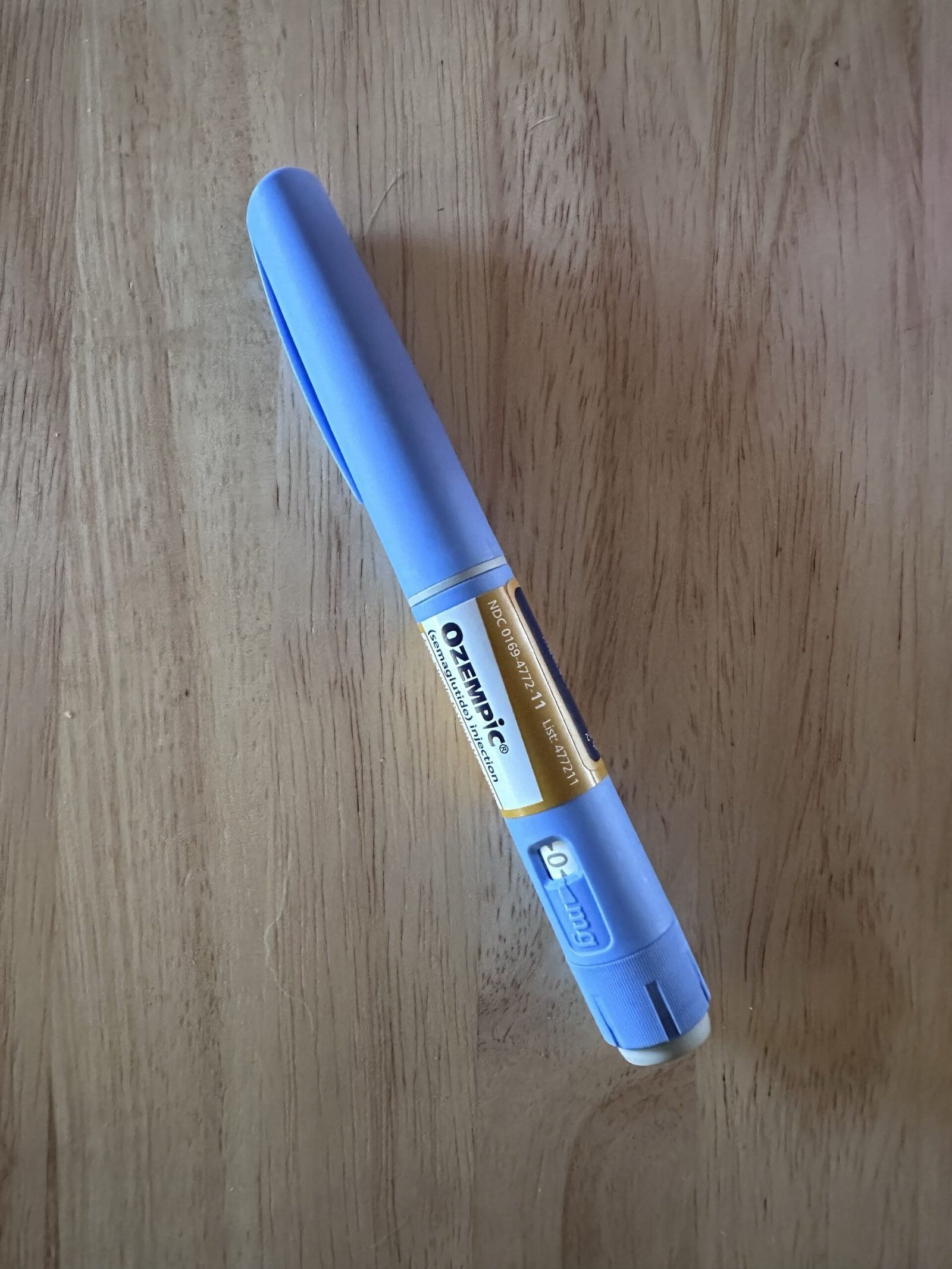
Some people take GLP-1s to manage type 2 diabetes, while others take them for weight loss. As the research expands, we are also seeing cardioprotective effects, protection from kidney disease in diabetics (New England Journal of Medicine, 2026), and benefit in treating metabolic associated steatotic liver disease (MASLD). The usefulness of these medications just seems to keep growing.
The full pharmacology of GLP-1 and GIP medications is beyond the scope of this post, but one essential point is this: these medications slow gastric emptying. And as anyone who has taken them can tell you, the gastrointestinal side effects range from non-existent to severe: nausea, reflux, vomiting, constipation, and diarrhea (NEJM, 2026).
Do GLP-1 medications affect the oral typhoid vaccine?
Honestly? We do not know yet, and that is the whole point of this post. At this time there are no studies on GLP-1s and oral vaccines that I am aware of. There is no official statement from Bavarian Nordic (the manufacturer of Vivotif) on GLP-1 use with the oral typhoid fever vaccine. That said, there are also no contraindications to taking them together.
Here is what I keep in mind and will keep watching:
- Will the vaccine still work? GLP-1s delay gastric emptying, and the oral typhoid vaccine is given in multiple doses. If the capsule is not leaving the stomach the way it would in someone without delayed gastric emptying, can we be sure the vaccine is working as intended? We do not know yet (but if I were getting a PhD, this would be my thesis topic).
- Will side effects stack? If someone has even mild GLP-1 side effects, will the oral typhoid vaccine make them noticeably worse? And how would that play out for someone who already has severe GLP-1 side effects?
Any change to how a vaccine is given, even something some clinics are already doing, is off-label and not backed by current research. So this is food for thought, not a settled protocol.
Oral vs. IM typhoid vaccine: which is better on a GLP-1?
Both forms protect against typhoid, but they work differently, and that difference matters if you are on a GLP-1. Here is a side-by-side look.
| Oral typhoid vaccine (Vivotif) | Injectable typhoid vaccine (IM) | |
|---|---|---|
| How it’s given | Enteric-coated capsule, 4 doses every other day | One shot into the muscle |
| Depends on the GI tract? | Yes. It must pass through the stomach and dissolve in the intestine | No. It bypasses the digestive system |
| Affected by delayed gastric emptying? | Possibly (unstudied with GLP-1s) | Not affected |
| Best for | People not on a GLP-1, or on a stable dose with no side effects | People on a GLP-1 with moderate-to-severe GI side effects, or who recently changed doses |
What should you do if you’re on a GLP-1?
We meet! This is one of the reasons a counseling session before international travel is so important. We will go over your medications and how well you are tolerating them.
Have you been on a GLP-1 without changing your dose, and you have no side effects? You may want to try the oral vaccine. Or, because there are so many unknowns right now, maybe we stick with the intramuscular (IM) vaccine that does not depend on the GI tract.
Ultimately, if you are on a GLP-1 and want the oral typhoid vaccine, I would suggest:
- Do not plan to take it right after increasing your GLP-1 dose, or after switching from a GLP-1 to a GIP/GLP-1.
- If you have moderate-to-severe side effects from your GLP-1, skip the oral vaccine and consider the IM vaccine instead.
And whether you are on a GLP-1 or not, the oral vaccine should be taken one hour before meals with cold or room-temperature fluid.
Frequently asked questions
Can I take the oral typhoid vaccine while on Ozempic or Wegovy?
There is no official contraindication, so it is not banned. But because GLP-1s slow gastric emptying and the oral vaccine relies on the GI tract, it is worth discussing with your travel medicine provider. If you are on a stable dose with no side effects, it may be reasonable. If not, the injectable version is a safer bet.
Is there a typhoid vaccine that doesn’t depend on the stomach?
Yes. The injectable (intramuscular) typhoid vaccine goes into the muscle and bypasses the digestive system entirely, so delayed gastric emptying from a GLP-1 should not affect it.
Do GLP-1 medications make the oral typhoid vaccine less effective?
We do not know. There are currently no studies on GLP-1s and oral vaccines. The concern is theoretical: if the enteric-coated capsule does not move through the stomach normally, it is unclear whether the vaccine works as intended. This is an open question, not a proven problem.
How is the oral typhoid vaccine taken?
It is an enteric-coated capsule taken every other day for four total doses, one hour before meals, with cold or room-temperature fluid.
Plan your pre-travel visit
If you are on a GLP-1 and have international travel coming up, let’s talk through your typhoid options together before you go. Book a pre-travel consultation and we will choose the safest, most effective plan for you. You can also explore our travel and routine vaccines and country-specific travel advice, or read about yellow fever vaccine contraindications if a live vaccine is part of your trip.
Happy and healthy travels!
This post is for general educational purposes and is not a substitute for individual medical advice. Talk with a qualified travel medicine provider about your specific situation.